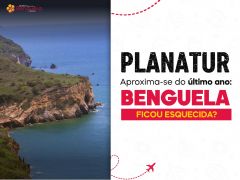
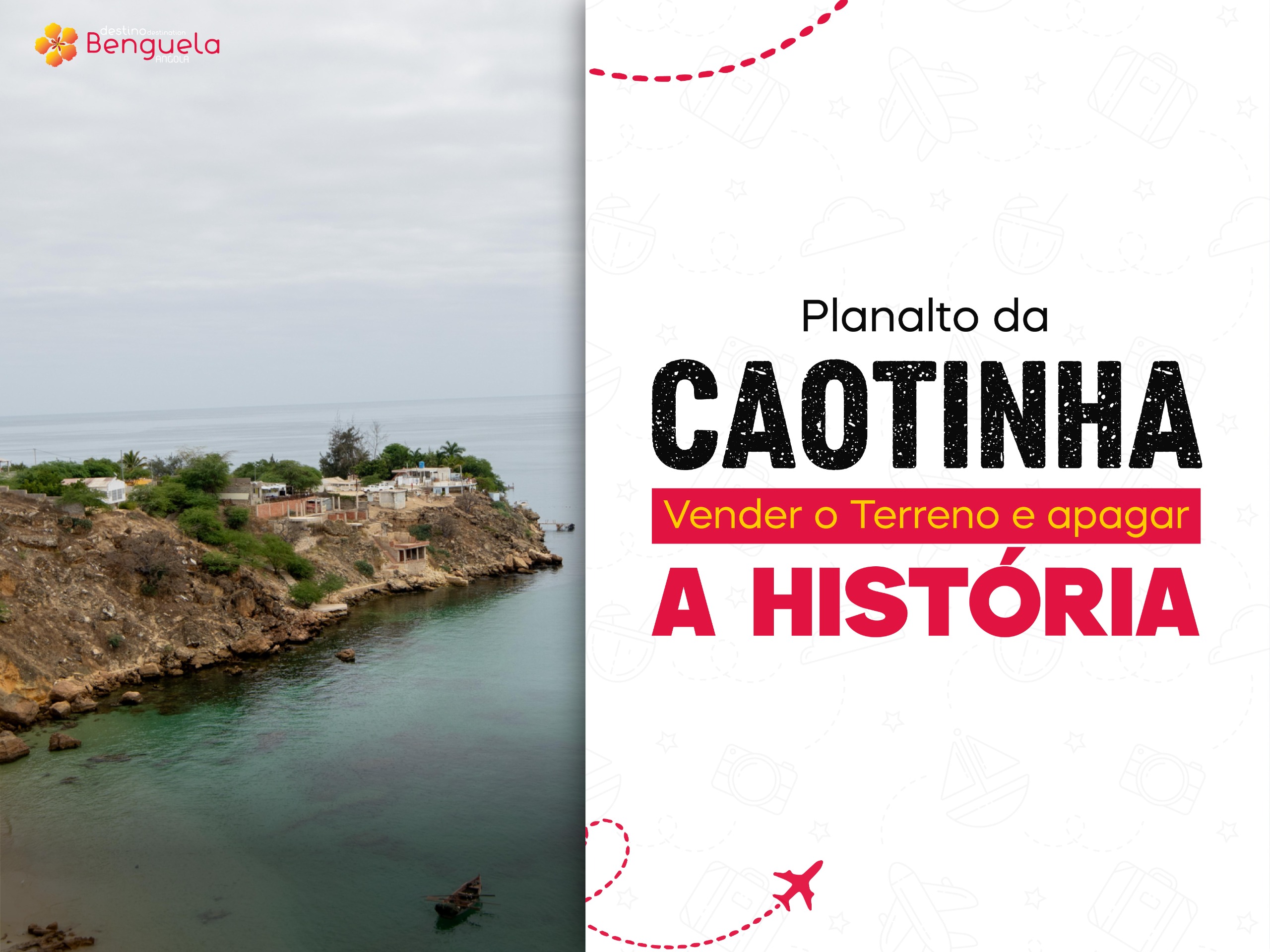
Planalto da Caotinha: we cannot sell the land and erase History
Planalto da Caotinha: we cannot sell the land and erase History
Opinion article by: Jorge Nunes
Caotinha Plateau: We Must Not Sell the Land and Erase History
Caotinha's archaeological heritage, landscape and tourism potential must be assessed before any land subdivision. Immediate revenue must not jeopardise what Benguela has yet to discover and appreciate.
Some decisions about land have consequences that extend far beyond the term of office of those who make them. Subdividing an area of archaeological interest, opening access routes and allowing construction can destroy, in just a few days, evidence that has endured for thousands of years and can never be recovered.
This concern must guide our approach to the Caotinha Plateau and the reported plans to divide it into plots for sale. Before boundaries are drawn, it is essential to establish what lies beneath the ground, what remains unexplored and what Benguela stands to lose.
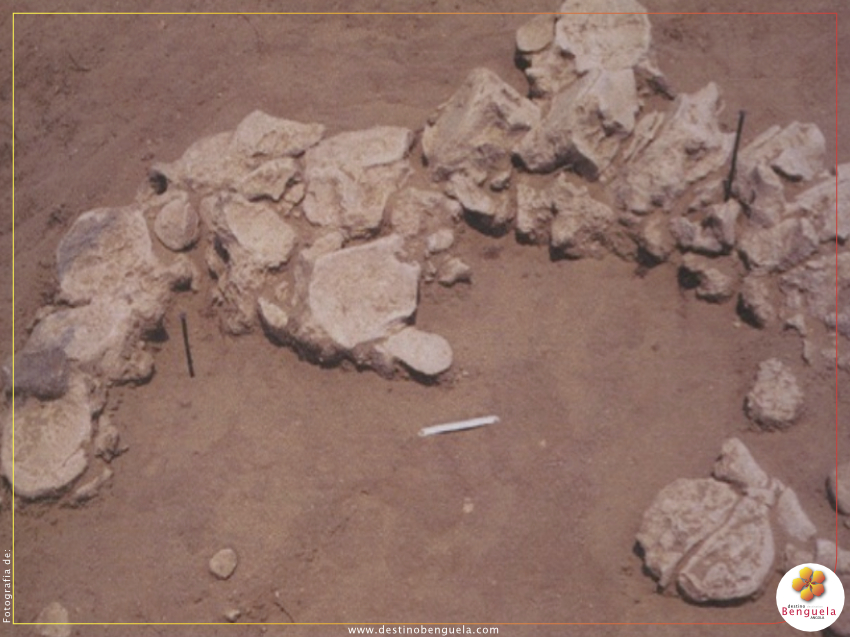
The value of this territory goes far beyond its sea views. Evidence of chipped stone tools and fossil finds recorded there warrants careful scientific assessment. These discoveries cannot be dismissed as insignificant details in the face of the prospect of construction.
The prehistoric significance of Benguela's coastline is documented. A scientific study published in 2023 identifies Dungo, Mormolo, Sombreiro, Macaca and Ponta das Vacas among the sites that bear witness to ancient human occupations on the province's coastal terraces. This region helps us understand the relationship between early human groups and coastal environments.
The Palaeolithic, often referred to as the Old Stone Age, left tools and evidence of stone working that help researchers understand human behaviour, techniques and patterns of land occupation. Fossils, in turn, provide insights into past life forms and environments. Although these are distinct types of heritage, both require proper identification, documentation and protection.
Heavy machinery can destroy what science has not yet had the opportunity to examine
The problem cannot be solved by collecting a few stones or fossils before construction begins. The position of the materials, the layers in which they are found and the relationships between different traces are all part of the scientific evidence. An artefact may survive in a collection, but the context that allows us to understand it may be lost forever.
Protecting this heritage also means keeping certain areas available for future research. Not everything needs to be excavated immediately. New questions and methods may eventually reveal more about what we cannot yet interpret.
Existing scientific work must inform decisions about this coastline. The National Museum of Archaeology in Benguela participates in research with international partners. Since 2023, the Franco-Angolan Prehistoric Mission has been investigating the earliest hominins in the province's coastal areas, including excavations of stone-knapping workshops and fossil sites. This ongoing work reinforces the need to consult specialists before transforming the territory.
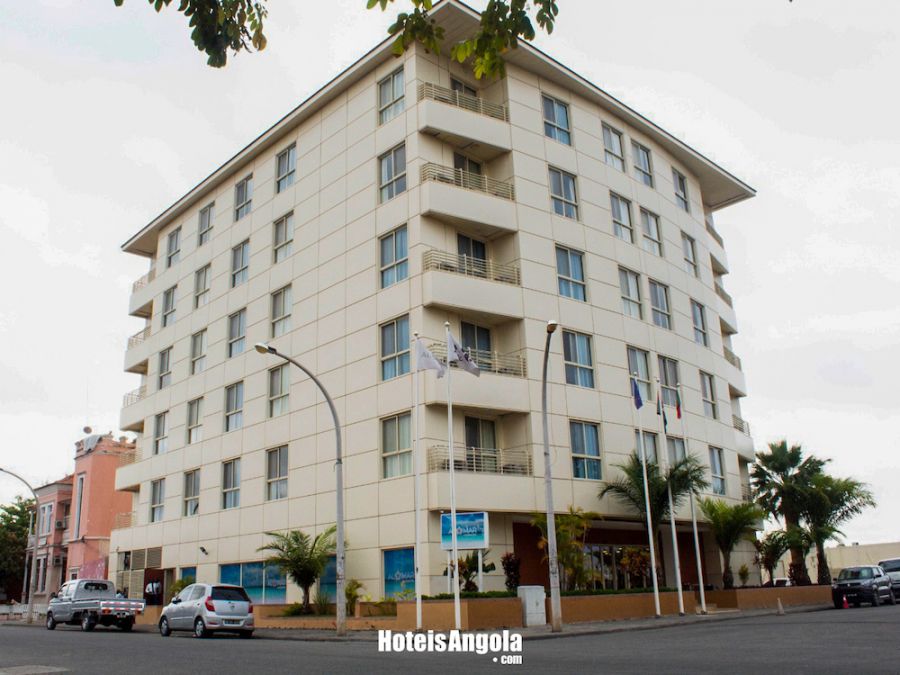
Modern hotel unit, opened on December 14, 2011. It is located in the commercial area, Rua 15 de Agosto Nº 86/88. It is just 500 meters from the beach area (Restinga). Hotel with 58 rooms, 3 suites, a Restaurant and a Bar with panoramic views on the
Situated in Lobito, the Turimar Business Hotel is a modern hotel offering 40 large rooms, 7 suites and 4 apartments with contemporary decor and equipped with every convenience for business or leisure stays. The hotel's excellent location, at Independencia Avenue, 77, within walking distance of the sea port and Lobito Administration, makes Turimar Business Hotel the best choice possible at Lobito. With two meeting rooms and an auditorium, and the availability of the apartments for longer stays, Turimar Business Hotel is the ideal place for your business or events.
Located between mountains with around 120 hectares of which 100 are reserved for our safari, CV LODGE & SPA, the most impressive luxury lodge in Benguela
Part of the AMAC Environmental Park, Lodge Kapembawé offers services in the areas of leisure and entertainment. With a privileged location in Benguela, with 20 Bungalows, 6 wooden houses, 16 low-cost rooms and 1 family house with 3 bedrooms. Stand out
Its excellent location makes Uami your best choice for holidays, weekends or accommodation in Lobito. We have 18 themed rooms in a curious mix between the rich Angolan culture and a risky creative approach to comfort and contemporary
The Flow Hotel Benguela is in the heart of the city. The capital of the province of Benguela is just 5 km away. Due to its proximity to the provincial capital and the airport, our Hotel is perfect for passengers, business people and business tourism.
Hotel Residencial Kuyoya is located in Benguela, on Rua General João de Almeida, opposite the Sonangol fuel pumps, next to the Kalunga cinema. It has 26 rooms each with specific categories, in addition, it has a terrace, restaurant and
Located in the center of the acacia rubras, it is distinguished by the charm and glamor of the other hotel units in the region because it has a differentiated offer.
The Hotel Praia Morena, one of the main hotel references in the Province of Benguela, offers, in addition to accommodation services, other services at your disposal:
Residencial VG in Benguela, an economical solution for your stays. We provide a comfortable and pleasant stay, with rooms that offer a private bathroom, cable TV and air conditioning. Additionally, enjoy private parking. Come and meet
Residencial VG in Benguela, an economical solution for your stays.
We must not confuse the location of individual archaeological sites with the entire plateau, nor assume that every plot has the same significance without a proper survey. This is precisely why the area must be assessed, mapped and planned before land subdivision and construction.
The example of Bentiaba, in Namibe, helps illustrate what is at stake. Research conducted under the PaleoAngola Project has revealed extraordinary palaeontological wealth, including fossils of mosasaurs, plesiosaurs, turtles and other animals. Bentiaba stands out particularly for its ancient marine ecosystems; mosasaurs and plesiosaurs were marine reptiles, not dinosaurs. This heritage has supported international research, training and scientific outreach.
The lesson for Benguela is clear: knowledge can enhance a territory's value and create reasons to visit it. However, this opportunity depends on safeguarding the resources that make it possible.
At Caotinha, scientific interest can be combined with hiking, interpretive trails, environmental education and ecotourism. Sombreiro and the area's viewpoints could form part of routes that bring visitors closer to the landscape and the natural and human history of this coastline.
With proper planning, trained guides and visitor regulations for sensitive sites, this offer could benefit local communities, tour operators, restaurants and accommodation providers. It presents an opportunity to generate sustained economic activity that deserves consideration before opting for the one-off revenue from land sales.
Caotinha must not become a patchwork of plots, walls and buildings without a vision for the area as a whole
The Municipal Administration of Navegantes must clarify the reported land subdivision: what area is covered, which plan supports it, what official assessments have been issued and how archaeological, palaeontological and landscape values have been taken into account. Was the National Museum of Archaeology consulted? Have areas of scientific interest been identified and safeguarded? Will access to trails and viewpoints remain available?
The Lobito Lighthouse, is an Angolan lighthouse located at the top of the cliffs on the east side of the entrance to the port and Lobito bay, in front of the tip of the restinga, north of the city of the same name, province of Benguela.
Dungo is a dry river (oued) that receives a series of tributaries, flowing into a sandy alluvial surface formed by annual discharges. These water courses over thousands of years will have made visible in various places concentrations of artefacts and cuttings probably as a result of the dismantling of carcasses of marine animals or terrestrial animals of medium and large size, such as the ancestors of ungiris or olongos (Tragelaphus strepsiceros) or even elephants, given the size of the cutting instruments. The stations were studied from the geological point of view by Dr. Mascarenhas Neto from the Angolan Geology and Mining Services in 1956, by Professor Gaspar de Carvalho who in 1960 , which collected several lithic pieces, some of which were offered to the Mendes Corrêa Museum of Anthropology in Porto. A study and publication by Dr. Carlos Ervedosa resulted in them in 1967.
Situated next to the Dombe Grande road, about 30 km from the city of Benguela, it covers an area of 150 km2, mainly constituted by an elevated plain surrounded by mountains more or less steep and with altitudes varying between 50 m
Mangroves are seen as a nursery for marine species, rainwater retention basins, and protect the seafront from erosion and flooding, among other functions.
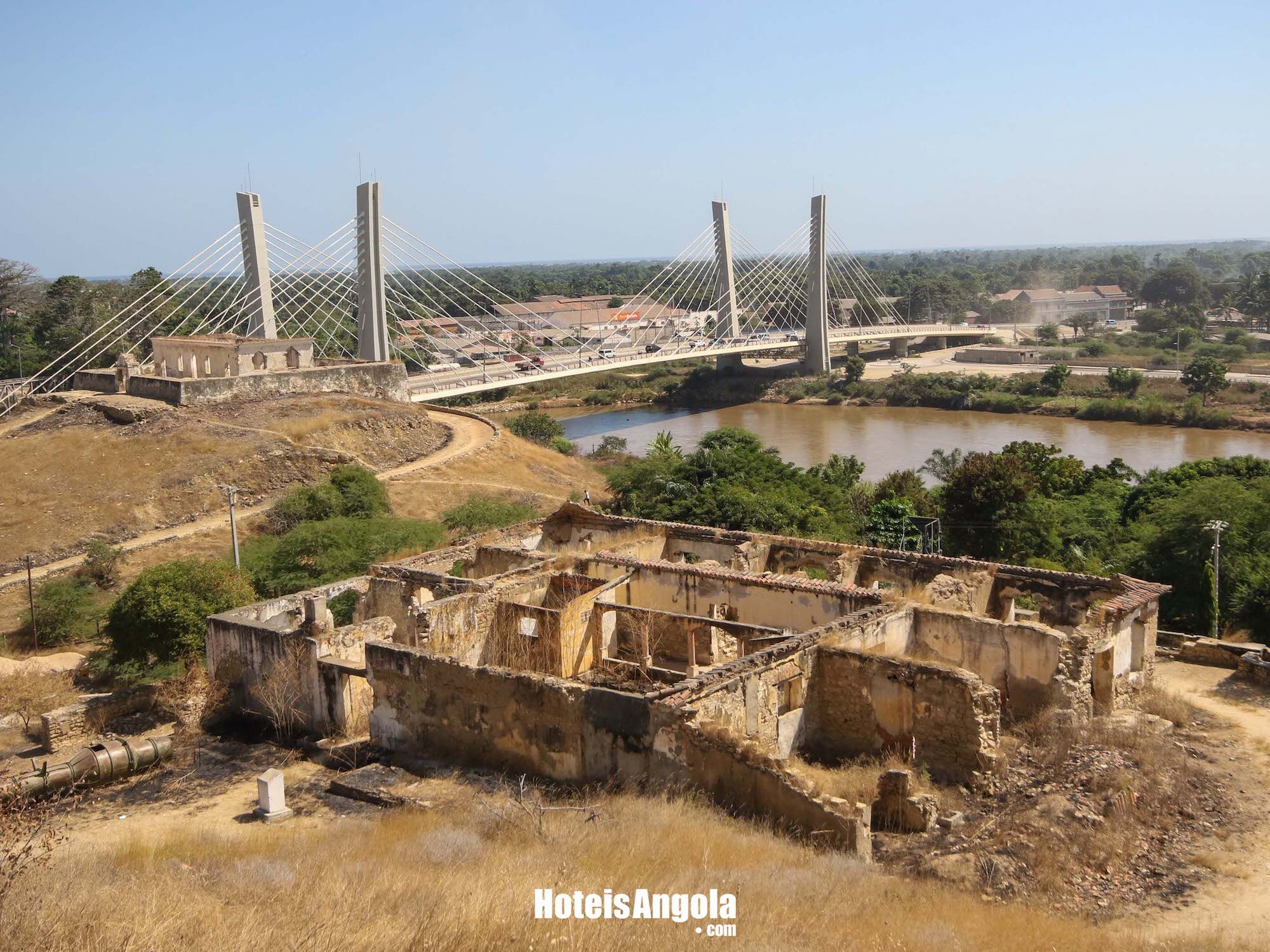
The house of the first administrator of Catumbela, often referred to in old sources such as “residence of the municipality”, stands at Morro da Catumbela, in a strategic point over the valley and the course of the river.
The Lobito Ethnographic Museum, located in the municipality of the same name, Benguela province, is a faithful portrait of the ethno-cultural diversity of the people of Angola, as evidenced by the composition of its museum collection.
The museum is an institution of scientific, research, staff training, conservation and archaeological information nature.
These questions require public answers. The absence of published assessments does not prove that none exist, but it prevents the public from evaluating the grounds for the decision.
If no adequate assessment has been carried out, I argue that the process should be suspended in potentially affected areas until the necessary surveys are completed. If reports already exist, they should be made public alongside the proposed protection measures.
The need to raise revenue cannot replace sound land-use planning. An administration must also be judged by its ability to safeguard resources, prevent irreversible damage and create lasting opportunities.
Benguela needs investment and development. It must also recognise that some areas of land have a value that remains to be discovered.
Before selling Caotinha off in plots, we must understand and protect what no amount of revenue can ever restore once it has been destroyed.














 English
 Português