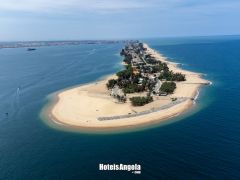
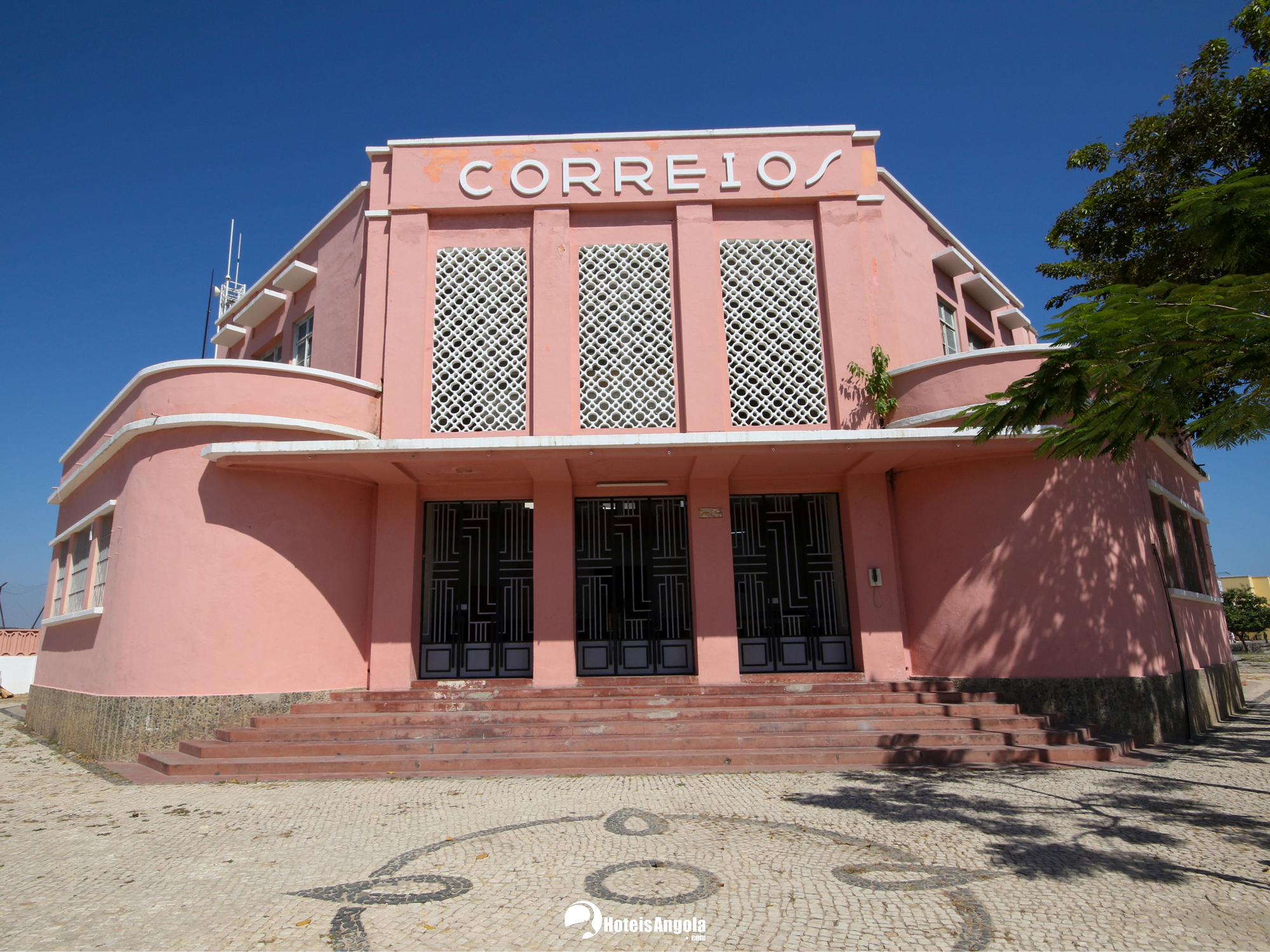
Implemented in Lobito Sand spit, this Post Office Building is one of the modernist landmarks of the Coastal Urban Landscape.
Its architecture reflects the effort to adapt to the tropical climate:
Facades with perforated elements, known as combogós, which promote cross-ventilation and shading, ensuring remarkable thermal comfort indoors throughout the day.
With sober lines and rational proportions, the complex is organized into horizontal volumes, marked by lattice panels and by a tower-like structure that punctuates the corner and serves as a visual reference along the urban frontage.
The slightly recessed entrance portico creates a shaded transition between the exterior and the atrium, reducing heat gains and welcoming visitors in greater comfort.
The architectural language is typical of 20th-century Luso-African modernism:
Functional, durable, and with particular attention to the climate, combining robust materials (concrete and masonry) with passive environmental performance solutions (brise-soleil, grilles, and strategically positioned openings).
These choices reflect an era when public buildings sought to assert efficiency, service, and modernity, without relinquishing a clear and dignified urban expression.
More than just a postal services facility, the Post Office building is integrated into the civic hub of Restinga, engaging with other structures from the period and contributing to the architectural identity of Lobito.
For visitors, it is worth observing the details of the combogós, the way the tower shapes the silhouette of the block, and the building's relationship with the light and sea breeze.







 English
 Português
 WhatsApp
 Phone
Phone
 Email
Email