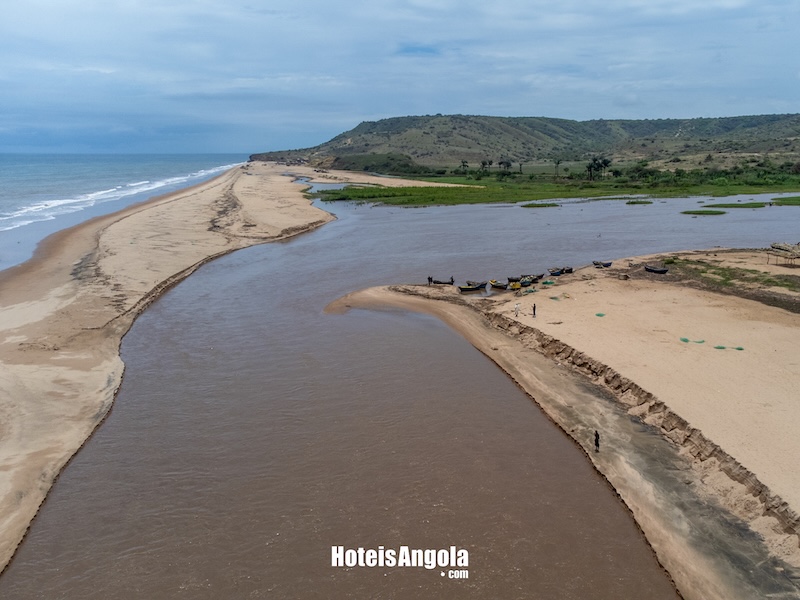
Hanha beach is a few kilometers from the city of Lobito (Benguela Province), about 13 km straight from the Restinga Bridge.
Between Hanha and Restinga, we can also see the Jomba area, once known for its carbonated water extraction.
Hanha Beach is formed by the mouth of the Cubal River, whose mixture of fresh and salt waters creates an ecosystem of high biodiversity (coastal and maritime fauna and flora). The coastline features cliffs and rocky outcrops that shape a nearly pristine landscape. From September to December, it is a nesting ground for sea turtles. The so-called "boat cemetery" once stood nearby; the hulls have now been dismantled and the ironwork removed.
As a beach, it's a sparsely frequented bathing area, used mainly by fishermen and the local community. Its secluded nature maintains the silence, naturalness, and near-pristine state of the place, ideal for those who enjoy coastal walks, landscape observation, photography, etc.
Final access requires a sturdy vehicle (preferably four-wheel drive). The descent to the beach is via a narrow, rocky trail, and during the rainy season, the sand is often washed away, exposing more rocks.
Above the coastline lies the town of Hanha, with a tradition of palm oil production (there are remains of the old factory). The agrarian landscape has evolved, and today farms dedicated to corn, onions, and beans, among other crops, predominate.
Hanha is worth a visit, and your itinerary can combine the beach and the mouth of the Cubal River with stops in Jomba and Hanha, appreciating the nature and local history.







 English
 Português
 WhatsApp
 Phone
Phone
 Email
Email

