Parque Regional da Chimalavera

Chimalavera Regional Park

Chimalavera Regional Park

The Ministry of the Environment and the Provincial government of Benguela, with the support of Imogestin SA, have an ongoing project for the rehabilitation of the Chimalavera Regional Natural Park, which intends to return to the Province of Benguela

And to the country, an environmental treasure for the protection of animal and plant species, so necessary for the development and enrichment of our heritage.
The Chimalavera Regional Natural Park was established as a special reserve by Legislative Diploma nº 4124 of 06/05/1971 and elevated to the status of Regional Natural Park by ordinance nº 352 of 04/15/1974.

Located next to the Dombe Grande road, approximately 30 km from the city of Benguela, it covers an area of ​​150 km2, mostly made up of a high plain surrounded by more or less steep mountains and with altitudes varying between 50 m and 265 m
. As there are no rivers, lakes or wetlands that retain water for some time, the watering of the Park's animals depends on a borehole and a pumping network and distribution tanks, which have long been inoperative, and is currently carried out by autotank which, in a irregular and insufficient, they add some water to the 2 existing drinking fountains.

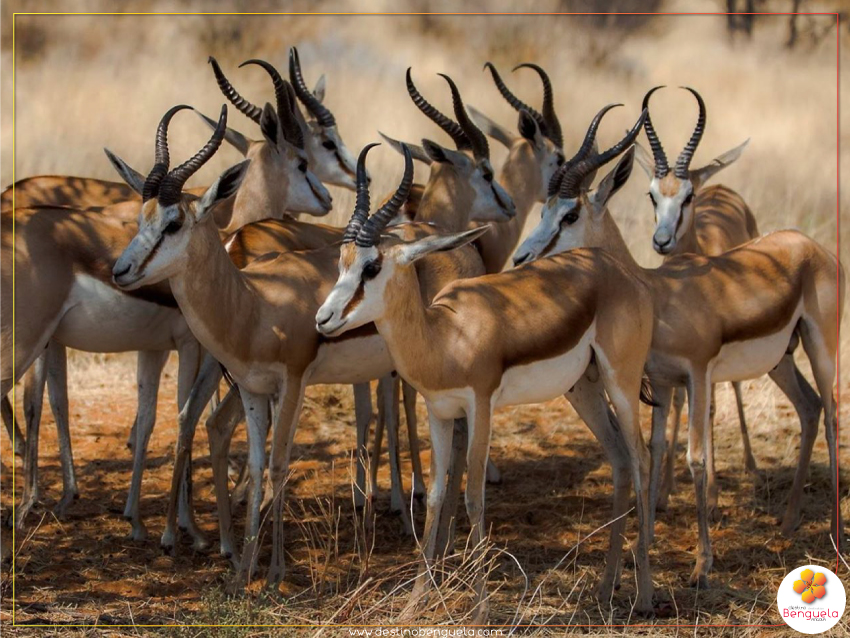
The vegetation cover is scarce and consists of low herbaceous vegetation (grass) and thorn trees (acacias) and, despite everything, it manages to maintain small groups of Fan Goat and, when there is water, it is also possible to see small groups of monkeys known here as Dog Monkey. During the rainy season the number of these species increases considerably within the Park.
Our Fan Goat – Antidorcas Marsupialis angolensis Blaine, 1922 - is one of the three known subspecies, thus constituting a unique genetic material, which, the lost, it would no longer be possible to recover.

Although there is information and knowledge that other species once existed here, such as Zebras, Rock Goats, Jackals, etc. There has been no news of its sighting in the Park area for several years now.
Previously, there was a fence made of concrete stakes and wire, which only covered part of the periphery of the park, as it was considered that other areas, as they were made up of cliffs, constituted a natural barrier.
This fence is now non-existent.
Baía Farta, Benguela, Angola

Video


The Chimalavera Regional Natural Park was established as a special reserve by Legislative Diploma nº 4124 of 06/05/1971 and elevated to the status of Regional Natural Park by ordinance nº 352 of 15.04.1974.

Situated next to the Dombe Grande road, about 30 km from the city of Benguela, it covers an area of ​​150 km2, mainly constituted by an elevated plain surrounded by mountains more or less steep and with altitudes varying between 50 m and 265 m. Since there are no rivers, ponds or swampy areas that retain water for some time, the watering of the animals in the Park is dependent on a borehole and a pumping network and distribution tanks, which has been inoperative for a long time and is currently carried out by an autotank that irregular and insufficient, they put some water in the 2 existing drinking fountains.

The vegetation cover is scarce and constituted by low herbaceous vegetation (grass) and thorns (acacias) and, despite everything, it manages to maintain small nuclei of Le Cabra de Leque and, when there is water, you can also see small flocks of monkeys here known as Macaco Cão.

During the rainy season, the number of these species within the Park increases considerably. Our Fan Goat - Antidorcas Marsupialis angolensis Blaine, 1922 - is one of the three known sub-species, thus constituting a unique genetic material, which, if lost, would no longer be possible to recover.

Although there is information and knowledge that previously existed here other species, such as Zebras, Cabra das Pedras, Jackals, etc. there have been no reports of his sighting in the Park area for several years.

Previously, there was a fence made of concrete and wire piles, which covered only part of the park's periphery, since other areas, as they were constituted by cliffs, were considered to constitute a natural barrier. There is no such fence today.

Dungo Archaeological Station
Previous article
Dungo Archaeological Station
Macaca Beach
Next article
Macaca Beach

Não espere mais, precisa de ajuda?