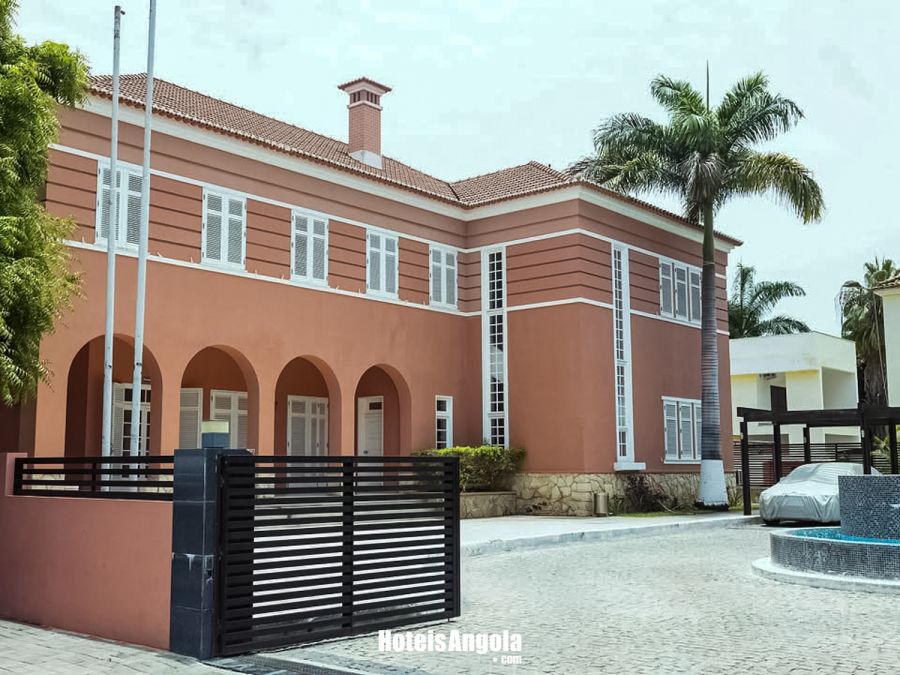
The house of the first administrator of Catumbela, often referred to in old sources such as “residence of the municipality”, stands at Morro da Catumbela, in a strategic point over the valley and the course of the river.
Its main value is its institutional history, as it symbolizes the establishment of colonial administrative power in the area and the project to organize, on the hill, a new urban center connected to what was then called Nova Asseiceira (the 19th-century name for Catumbela).
In 1836, by decree of Queen Maria II, the founding of Nova Asseiceira was formalized on the left bank of the Catumbela River; at that time, sources record the construction of the residence of the head of the municipality on Morro da Catumbela, the building that local tradition identifies as the House of the First Administrator.
Local accounts state that the "first residence of the first colonial administrator" began construction in 1770 and was inaugurated in 1836.
The hill on which the house sits also houses the São Pedro da Catumbela Redoubt (1846-1847), a fortification built to control local uprisings and protect the river crossing.
Available documentation describes the house as a commanding manor residence, located atop the hill, with panoramic views and territorial control (direct connection to the river and access routes). Its value lies less in its architectural refinement and more in its strategic location and symbolic role as the seat of municipal power in the 19th century.
The Former Residence of the Administrator of Catumbela is classified as a heritage site by the Angolan State by Order No. 43 of April 18, 2001, including it in the list of protected municipal assets.
The house and the redoubt comprise a reference complex for interpreting the Portuguese-Angolan expansion in the region and the political and military dynamics of the 19th century.










 English
 Português
 WhatsApp
 Phone
Phone
 Email
Email