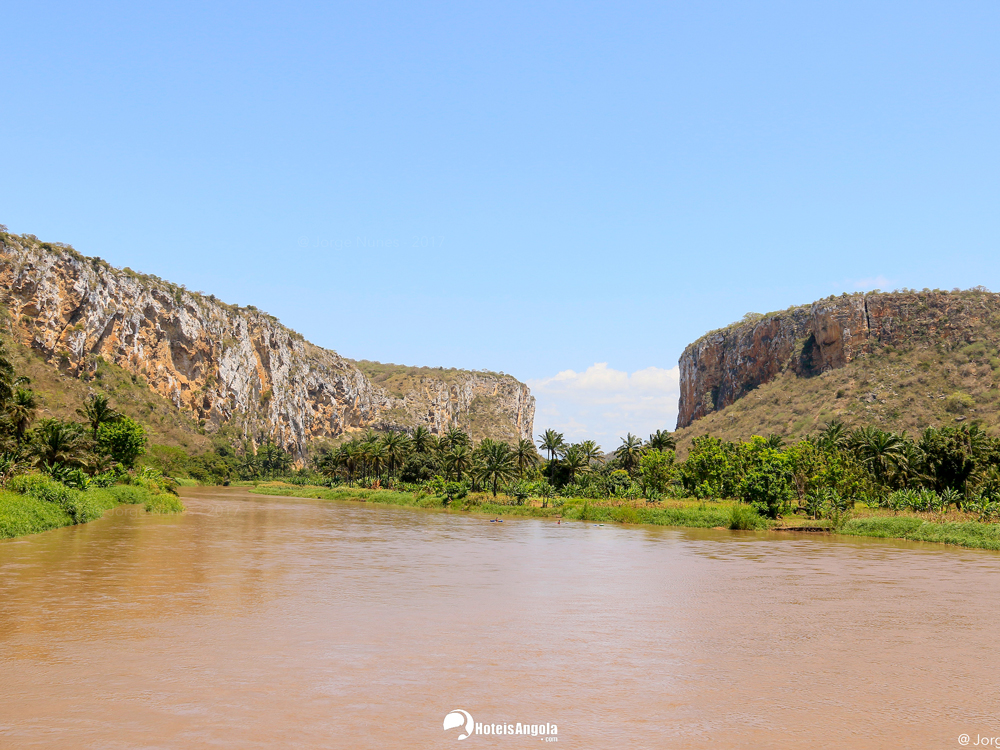
Egypt Beach, where the Balombo River flows, is a place with a mystical landscape that takes us back to Egypt. The cliffs and cliffs surrounding the beach, which give it its real beauty, are reminiscent of the Egyptian landscape.
It takes its name from its imposing natural beauty, which is reminiscent of the beaches of Egypt, as well as its pyramid-shaped coastal cliffs.
Egypt Beach has its coastline tempered by the cold Benguela Current, where it comes into contact with the Balombo River, which flows into its shores, making the area beautiful because of its landscape shaped by the river's flow, which runs through its fertile brownish-coloured lands characteristic of the area in general.
Its diversity of fauna and flora gives it a natural beauty of great splendour.
Its vegetation is dense and varied, with species of grass common to the southern region of Benguela, palm trees, and fruit trees such as mango, gajaja and almond trees.
Its soil is naturally fertile and is used by local agriculture, where agricultural products such as maize, tomatoes, beans, cassava, bananas, palm fruit, sugar cane and vegetables in general, such as cabbages and leafy greens, are produced.
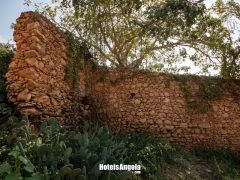
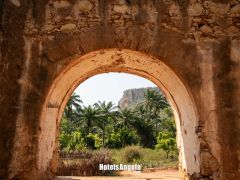
Its local architecture takes us back to the 16th century, with the remains of a fort that was used for the military defence of the territorial integrity of the area, built by the Portuguese, mainly against the Dutch, for their own protection and that of the enslaved people. We can also find the slave trading post, which was often the last place where many Angolans saw their own country for the last time, as it was used for the slave trade. We also find the slaves' courtyard, where enslaved people were held. It is divided into two parts: the courtyard, which refers to a space approximately 30 m wide/70 m long where they spent their days, and the dormitory, approximately 10 m wide/70 m long.
It has a very unique energy and local stories, told by the elders, that make us feel deeply aware of the place. Finally, there is the local cemetery, which contains the graves of some of the first people to arrive in the region, one of them notably shaped like a pyramid.
Its cliffs throughout the region are remarkably imposing.
The region itself attracts a diversity of birds because of the abundant vegetation found there. Its river is a natural source of food diversity, providing fish and freshwater shrimp. Along the beach, there are small boats used for artisanal fishing, as the sea is rich in a variety of fish, as well as a rare species of lobster known as the green lobster.
The entire area has great potential for tourism, including:
• Beaches along the coast, which are clear during the dry season, corresponding to the months of August to November, before the rains from the interior of Balombo Commune, which is surrounded by the municipalities of Bocoio and Cassongue to the north and by the municipalities of Ucuma, Quinjenje and Ganda to the south, all known for their significant river water resources.
• Ecotourism, due to the wildlife, attracting ornithologists and turtle watchers, as turtles frequently choose the area for nesting, as well as the region's diverse flora and geography
• Cultural Tourism
• Historical and Scientific Study Tourism







 English
 Português
 WhatsApp
 Phone
Phone
 Email
Email