A History of Polygamy: when African literature takes the stage in Angola.
A History of Polygamy: when African literature takes the stage in Angola.
The strength of contemporary African literature gains new life on stage with the theatrical adaptation of Niketche, a work by Mozambican writer Paulina Chiziane, one of the most prominent voices of Portuguese-language fiction on the continent.
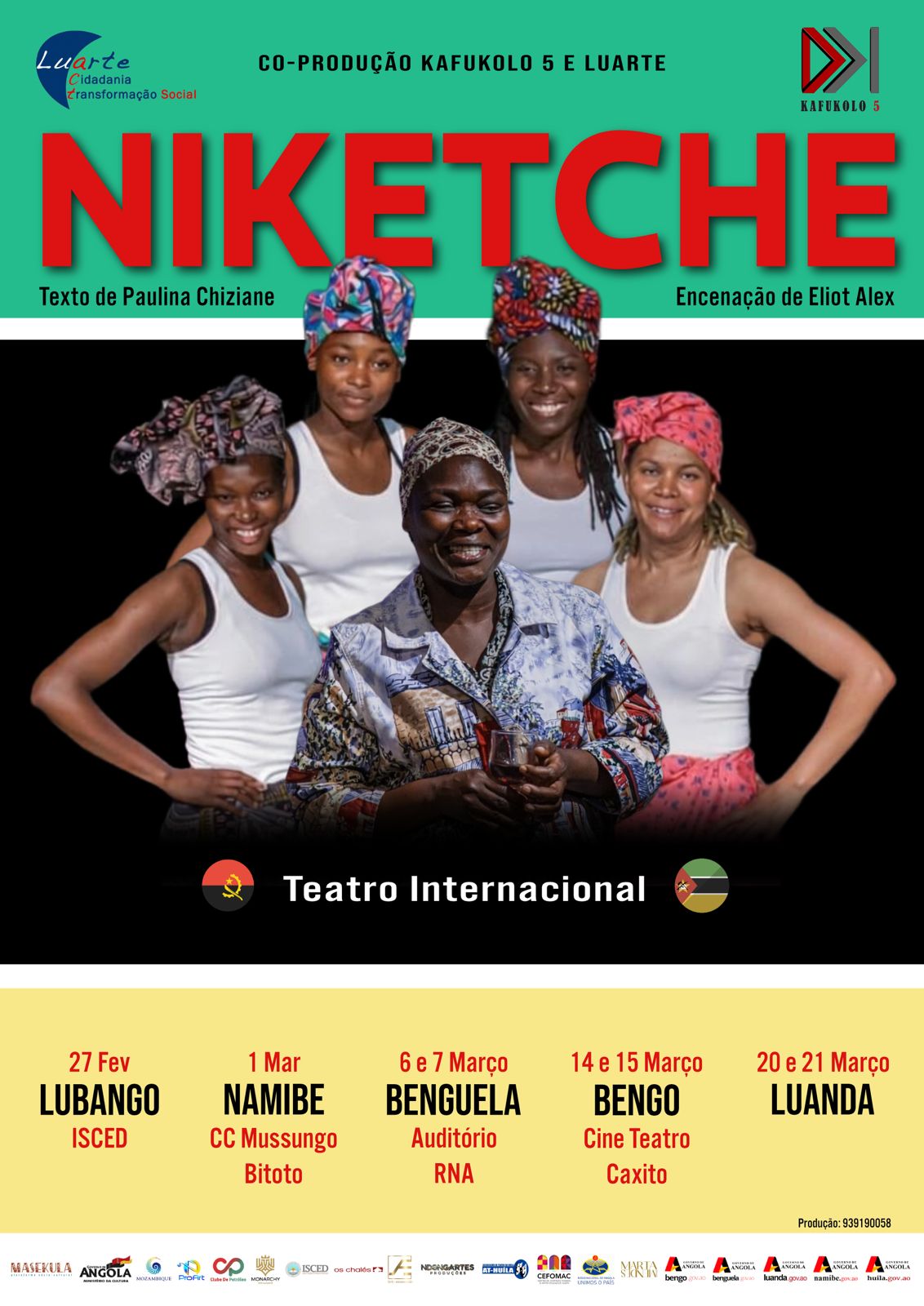
Presented in an international touring format, the play is the result of a co-production between Kafukolo 5 and Luarte, directed by Eliot Alex, and travels across several Angolan provinces, bringing a profoundly relevant text closer to diverse audiences.
A story that remains current;
Originally published in 2002, Niketche: A Story of Polygamy became an essential reference in African literature. The narrative follows Rami, a woman who discovers that her husband maintains several simultaneous relationships. What could have been merely a marital drama becomes a powerful reflection on tradition, culture, female identity, and power structures.
Instead of assuming the role of a silent victim, the protagonist builds a path of awareness and transformation, questioning the limits imposed by society and reinventing her own narrative.
It is precisely this dimension of resistance, dialogue, and discovery that gains renewed strength in the theatrical adaptation.
From book to stage: emotion and identity;
Bringing Niketche to the theater is not merely about staging a story — it is about embodying social conflicts that are still present in many African communities. On stage, bodies, gestures, silences, and dances make visible what the novel constructs through words: the complexity of human relationships and the power of female solidarity.
The staging aesthetic emphasizes the valorization of African identity, both in costume design and in the expressiveness of the actresses, reinforcing the cultural symbolism of the work.
More than entertainment, this is theater with a social purpose.
National tour and cultural exchange;
Performances in cities such as Lubango, Namibe, Benguela, Caxito, and Luanda reinforce the importance of cultural decentralization and access to performing arts beyond major urban centers.
This type of initiative strengthens cultural exchange between Angola and Mozambique, demonstrating how art can serve as a bridge between countries that share language, history, and similar social challenges.
Culture is also tourism;
In a country increasingly focused on diversifying its tourism offer, cultural events like this add value to the destination. Cultural tourism has the capacity to stimulate local economies, generate domestic mobility, and encourage demand for accommodation, dining, and related services.
The circulation of internationally relevant productions contributes to positioning Angola as an active stage for contemporary African artistic production.
A message that endures;
Niketche is not merely a story about polygamy. It is a reflection on choice, freedom, and transformation. As it takes the Angolan stage, it reaffirms the importance of African literature and the female voice in shaping narratives that challenge the status quo.
At a time when culture assumes a strategic role in social and economic development, initiatives like this show that theater remains a powerful tool for dialogue, awareness, and identity.

 English
 Português