

Lobito is one of the most beautiful cities on the African Coast, hence it is called the Visiting Room of Angola, with its sandbank that stretches for more than 3 km, “the blue city, almost floating, that the sea kisses and flirts with with dangerous love". Lobito has the most important sea port on the west coast of Africa, and the 2nd cargo port in the country.
City of the municipality with the same name, in the province of Benguela, located on the Atlantic coast. It has 3,648 km² and today has a population of over 200,000 inhabitants. It is limited to the North by the municipality of Sumbe, to the East by the municipality of Bocoio, to the South by the municipality of Catumbela and to the West by the Atlantic Ocean.
It was only in March 1843 that D. Maria II approved the birth of the city of Lobito, formerly known as Catumbela das Ostras. There were nothing more than a few sheds and a coconut plantation to consolidate the sandbank.
In 1888 a tax office was created, which was entrusted to the old José Maria dos Santos, then the only white person who had lived there for over 30 years.
But it was only at the dawn of this century (1902), with the beginning of construction of the Benguela Railway, that Lobito emerged from the doldrums in which it had been immersed for more than 300 years. With the railway concession given to the Englishman Robert Williams, the city definitively laid its foundations, in a daily battle against the swamp. In less than 20 years, Lobito went from an abandoned bay covered in mangroves to a modern city, head of the Benguela Railway and possessing a modern port. In these years, swamps were filled in, the construction of the market began, the bridge was built on the Lobito-Benguela Road, the post office building, the C.F.B., the Hotel Términus (the best in the Province for many years), were erected, the chapel of N. S. da Arrábida.
The 1925 “Boletim da Agência Geral das Colónias” is not ashamed to state that “Lobito is the most beautiful city on this coast”. It explains that this is due to three factors: “The excellence of its port; It is the frontier of the C.F.B line; The wealth of the ‘economic basin’, that is, the set of regions whose communication routes to the coast must have their frontier in Lobito.” In fact, at that time the pier already had 225 m of berthing wall, accommodating the largest ships in the world, and it was also the maritime gateway to the entire vast central plateau of Angola, including the very rich areas of Huambo, Bié and Moxico. But it was not only a maritime “station” for the interior of the colony, it was also the natural port for a large part of Southern Africa, and the most economical for communications between the copper mines of Katanga (Belgian Congo) and the ports of Europe. In 1929, the C.F.B. finally reached the border of the Belgian Congo. In Angolan territory, the line was 1,347 km long. Now the port of Lobito, more economical because it was much closer to Europe, could replace those of Beira and Cabo in the flow of ore. The increase in the number of passengers on the train was impressive: in 1908 it was 25,957 and in 1926 it was 233,865.
At the end of the 1940s, large avenues were built and the main districts began to be designed: Restinga, the most chic, exclusively residential, with spacious houses that sometimes overlook the Atlantic and sometimes the bay. Three kilometres long and in some places not even 300 metres wide, it was a veritable garden emerging from the sea. It was said that even the palm trees applauded its beauty. The only drawback was when the sea would overwhelm everything during floods; the Central or Commercial District alternated between this activity and residences; here was also the port and all its dependencies, the Benguela Railway terminal station, the Town Hall, the Post Office, the Hotel Términus and the Municipal Market; further ahead, on the road to Benguela, outside the port area and of more recent construction, was the Compão District, an area reserved for the less affluent class; with similar characteristics, perhaps a little more commercial, was the Caponte District; right in front of the sandbank, on the other side of the port, was the housing reserved for the indigenous people, known as Canata. Here, although there were already masonry buildings, reed and zinc were still predominant. In the 1950s, Lobito became definitively “cosmopolitan”. To meet the constant demand of its inhabitants and visitors, whose numbers were constantly increasing, the city’s commerce became increasingly sophisticated in the three streets surrounding the Municipal Market, which was soon completely surrounded by exquisite shops reminiscent of Porto’s Bulhão. New hotels sprang up. Industry grew in the surrounding area. Port activity experienced unprecedented growth. And with the Katanga Civil War, in the former Belgian Congo, the port of Lobito became even busier. At this time, the total amount of minerals transported was around 500 thousand tons per year. Its activity was similar to that of Leixões, and in terms of tonnage it was only surpassed by Lisbon, Lourenço Marques and Beira. Lobito also produced corn, cement, plastics, zinc, sisal, oils and sugars.
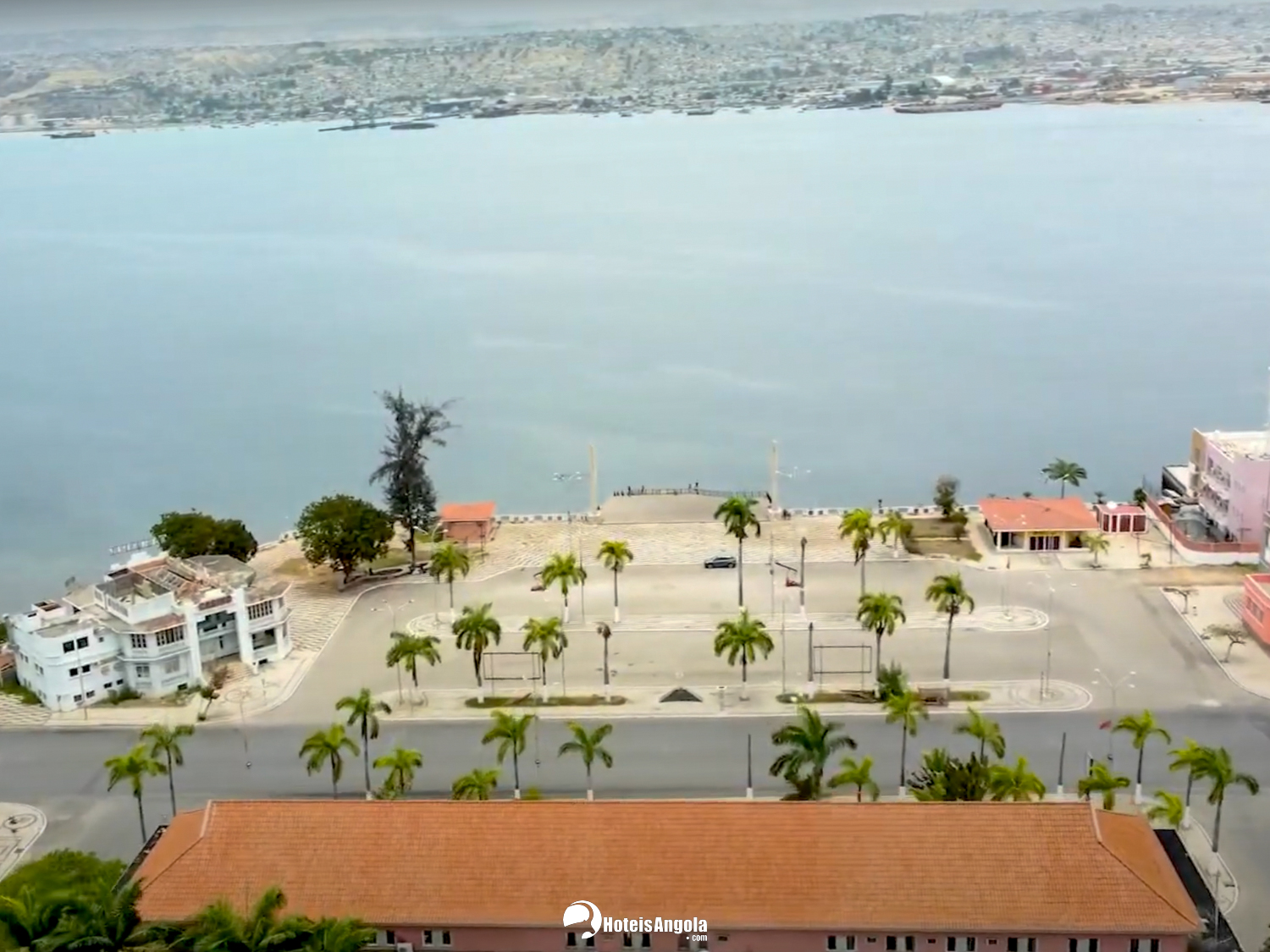
Now, the city's young population demanded entertainment and diversions. The cinema sessions at the Cine-Esplanada in Jardim Flamingo, near Compão, became famous. Under a gigantic concrete canopy built by the engineer Edgar Cardoso, children, young people and respected gentlemen took shelter from the sun and rain, enjoying the latest box office hits. It was above all an informal and relaxed atmosphere, allowing for a level of mobility that was never permitted in the old and heavy Cine-Imperium. At Christmas time, the façade of the Municipal Market was covered in lights and in Praça D. Carlos, a huge, brightly lit tree stood. Carnival was reputed to be the best in Angola. Its parades in Praça Salazar became famous. Here, in front of the Town Hall and under decorative Portuguese paving – this square was intended to resemble Terreiro do Paço, not even missing the pier with columns – the marches of popular saints also took place, in which the different neighborhoods competed based on the originality of their costumes and dance."















 English
 Português