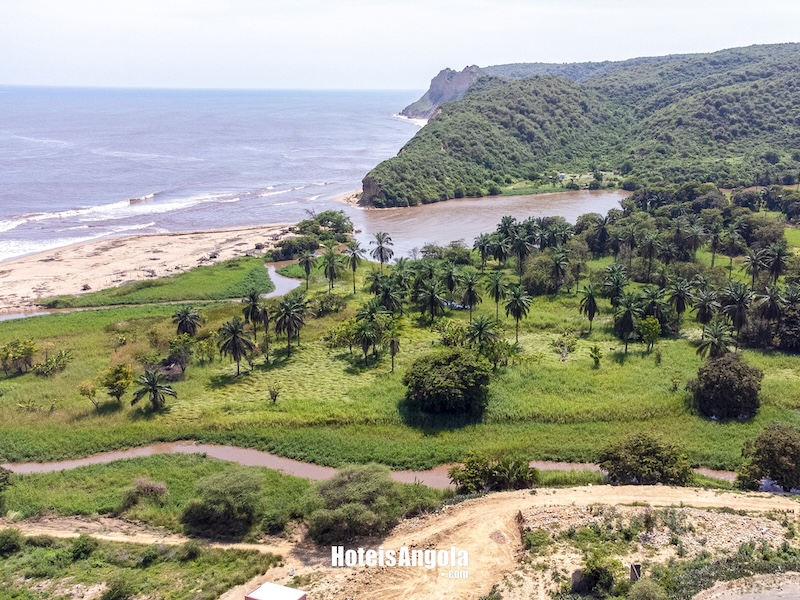
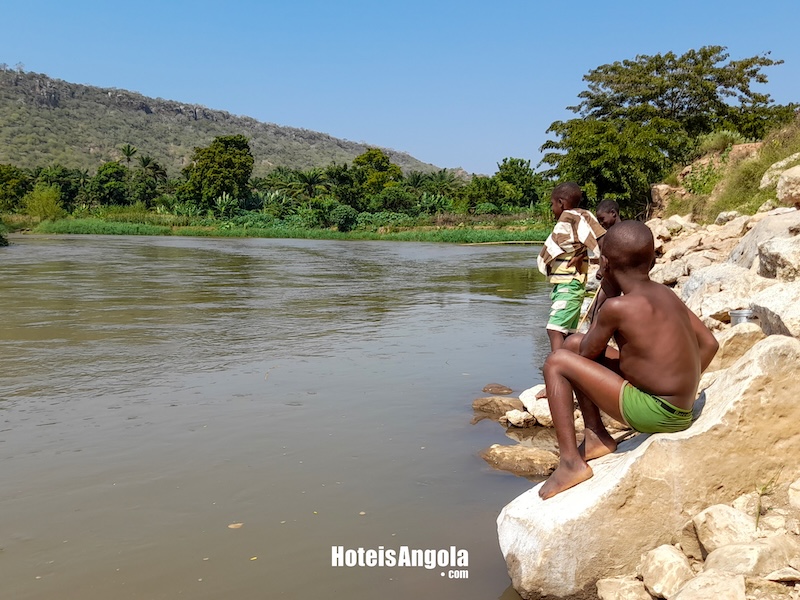
The mouth of the Balombo River, in Egypt Praia, is one of the most expressive coastal scenarios of Benguela.
Between cliffs and palm groves along the riverbanks, the river ends its journey by forming an estuary that concentrates biodiversity, local memories and enormous potential for nature and cultural tourism. For those seeking authentic places, it is an invitation to walk slowly, observe and learn.
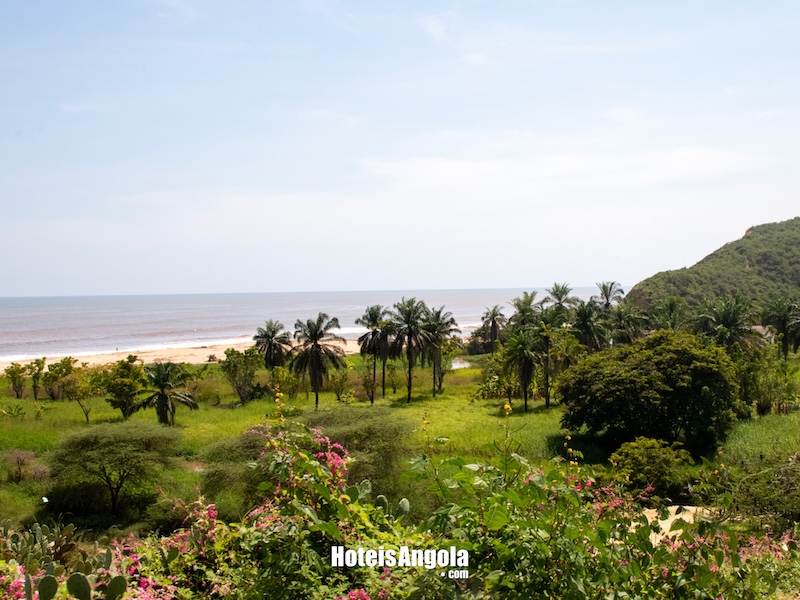
The mouth corresponds to Navala Beach, where the river opens into the Atlantic Ocean, and depending on the tides and seasons, reveals sandy banks and wetlands. The setting is marked by ochre-coloured cliffs, palm trees descending towards the sea, and the blue line of the Atlantic stretching as far as the eye can see.
The final stretch displays estuarine characteristics, with a mixture of fresh and salt water. The riverside vegetation (tall grass, shrubs adapted to salinity and patches of mangrove in favourable areas) creates refuges for waterbirds, juvenile fish and crustaceans. During periods of lower rainfall, the waters tend to become clearer, making it easier to observe aquatic life along the banks.
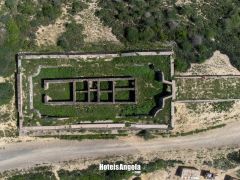
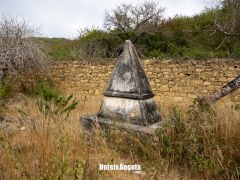
Around the river mouth, history is very much present; the São Sebastião do Egipto Fort (19th century) watches over the horizon from the top of the hill; a few kilometres away, there are places of remembrance linked to the history of the coast, such as Quintalão and the Slave Shop and the Egipto Praia Cemetery. This proximity makes it possible to combine nature and heritage along the same route.
During Cacimbo (the dry and cooler season), between May and August, temperatures are milder and the period is usually suitable for walking and photography. During the rainy season, the landscapes become greener, but some access routes may deteriorate and river sedimentation may increase.







 English
 Português
 WhatsApp
 Phone
Phone
 Email
Email