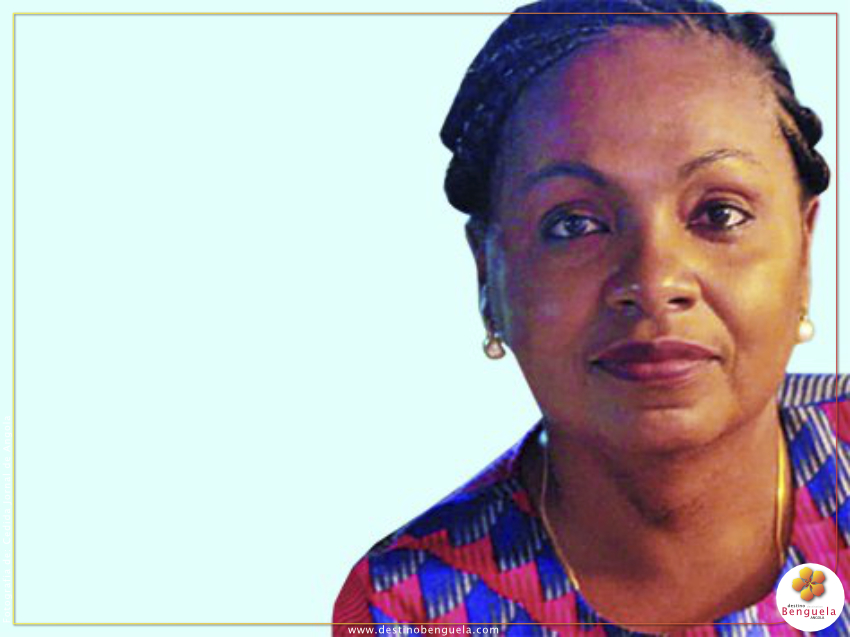
International Museum Day is celebrated today. The date has been celebrated annually since May 18, 1977, at the proposal of the International Council of Museums (ICOM), a UNESCO organization. To talk about the anniversary, Jornal de Angola interviewed the director of the National Institute of Cultural Heritage, Cecília Gourgel, who spoke about the current state of museums in Angola and the projects being prepared for them to overcome the new challenges brought by modernity. Cecília Gourgel classified the museum as a space where “the material and immaterial heritage of humanity is exposed”
What is a museum today?
It is a permanent non-profit institution, at the service of society and its development, open to the public, which acquires, conserves, researches, communicates and exhibits the material and immaterial heritage of humanity and its surrounding environment for the purposes of education, study and fun (delight).
How do museum professionals deal with this concept of museum today, particularly during this period of pandemic?
International Museum Day offers the opportunity for Museum professionals to meet the public and alert them to the challenges that museums face, which is why ICOM announced the theme of International Museum Day: "The future of museums: recovering and reimagining ”. Inviting museums, their professionals and communities to create, imagine and share new value-creating practices, new business models for cultural institutions and innovative solutions to the social, economic and environmental challenges that lie ahead. .
Do we already have an educated public? What is it for?
Yes, the public that visits Museums is educated and this is due to the implementation of Museum Education initiatives aimed at the most varied types of public, the vast majority of which are free. And the celebration of International Museum Day aims to encourage discussions in the museum field and inspire events proposed by institutions.
Angolan museums continue to be, as some young people say, the place for "old things”? What is your opinion on this concept? How should young people see the museum? What can the management of these institutions do to attract more audiences?< br>
No, Angolan Museums are no longer seen as a place for "old things”. The public, throughout these years of effective Peace, has learned to value these spaces. And the theme chosen by ICOM, "The future of museums: recover and reimagine” , precisely proposes reflection on the future of museums to demystify some concepts. However, it is only possible to inspire the future of museums if there is a creative commitment to the present.
How is the project to create community museums, adapted to the histories and realities of each of the capital's municipalities, currently?
With the process of merging the Ministries of Culture, Tourism and Environment, this initiative aims to promote museological processes in small communities aimed at preserving memory and local cultural heritage and The creation of community museums (in virtual typologies) requires an evaluation, firstly between the Museums' management and the National Institute of Cultural Heritage and subsequently sent to the MCTA Management for consideration.
A good part of the country's historical collection was looted, in the case of the Dundo Museum, some were lost during the war. What steps have been taken to recover them?
The Angolan Government intends to return cultural heritage originating in Angola in accordance with international conventions on historical heritage, namely "the convention on the prohibition of the illicit export of cultural goods and the UNESCO convention on export in cases of armed conflicts ”. The issue of exporting and returning cultural goods is old and is part of bilateral relations between countries, being a healthy way to honor cultural relations, in the return of those goods that are understood and confirmed as belonging to one another. Angola as a country and as a State and which must be reintegrated into the Museum.
Today we live in the era of new technologies. Do our museums already have a site where a tourist, interested in coming to the country, can consult to find out more about them before visiting them?
It is work that is ongoing. In fact, even before the pandemic, some museums were planning digital space and diversifying their audiences. Some museums have pages on social media (digital platforms) that tourists can consult and interact with professionals at these museums.
What future prospects for Angolan museums?
A promising future, as Angola is modernizing museums and digital has become, with museum doors closed, due to the Covid-19 Pandemic, an essential resource.
The concept of a modern museum is something that already dominates most of Europe and America and in the case of Angola, when will we be able to implement these principles?
In Angola, in national and regional museums, teams are small, with few resources, some with few skills in the digital area. The idea of "doing more and more, with fewer resources” is not possible for community work and continuity in museums. There is a need for greater cooperation with other entities to transfer knowledge, an investment in information technologies, the possibility of creating pilot projects, promoting access through investment in the digitization of collections. And, more than digitizing, thinking about what stories can be told from these digital collections. p>
PROFILE
Cecília Maria dos Santos Gourgel Bernardo
Affiliation
Carlos Guilherme do Amaral Gourgel and Efigénia da Silva Santos Gourgel
Province
Luanda
Marital Status
Married
Date of Birth
07/29/1968
Academic data
1977- 1981 Attended primary education at Escola São José de Cluny.
1981- 1983: Attended secondary school (5th and 6th grades)
at N’gola M’zinga school.
1983- 1985: Attended secondary school (7th and 8th grades)
at N’zinga M’bandi school.
1985- 1990: Attended Instituto Médio
of Economics of Luanda (IMEL), Medium Course
of Planning
and Management.
António Bequengue
Source: Newspaper from Angola
 English
 Português